
PM2.5 / PM10 Air Quality Meter
Real-time particulate readings that verify air quality is back to baseline after remediation
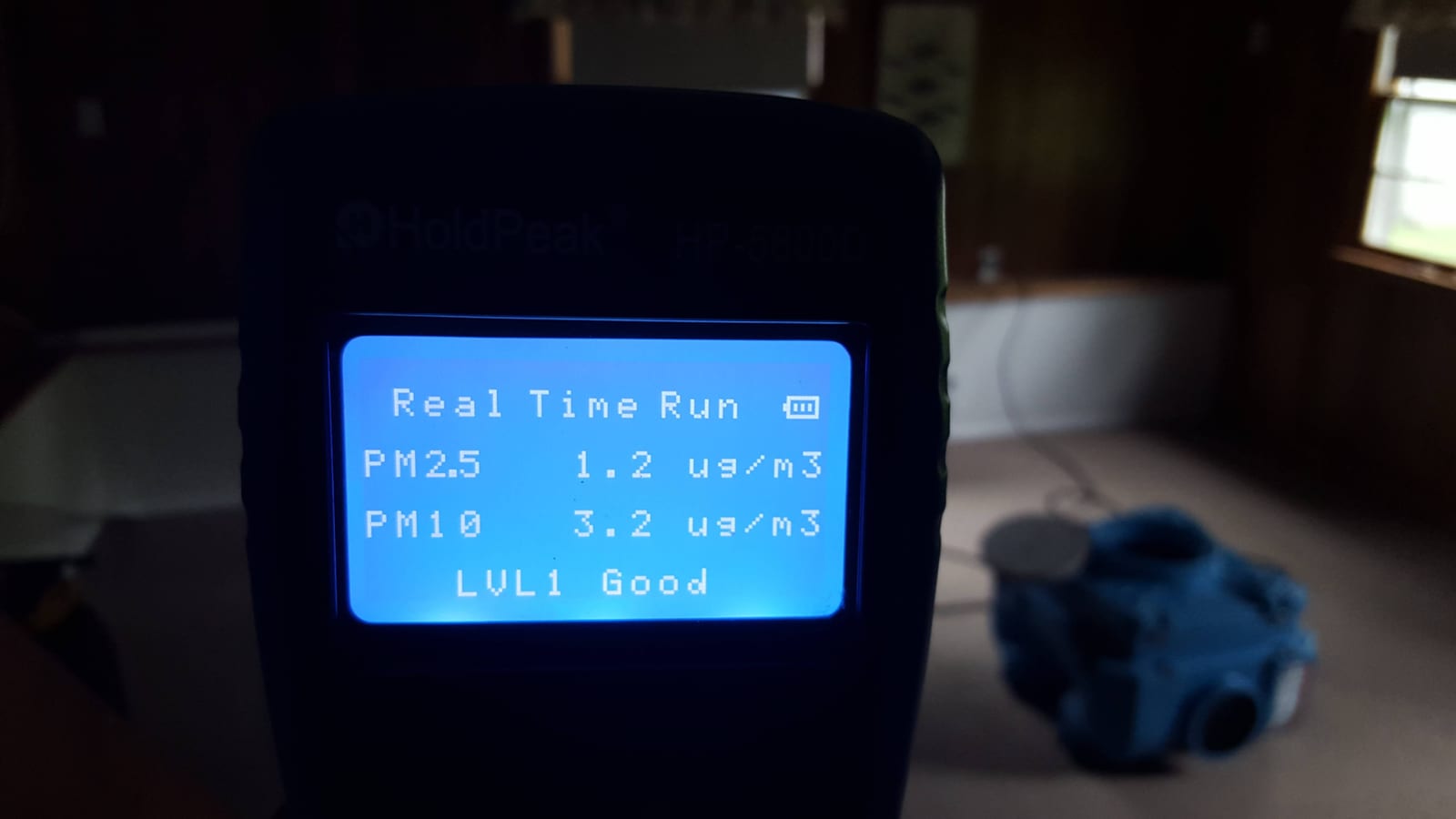
A PM2.5 / PM10 air quality meter measures the concentration of fine particulate matter in the air — particles small enough to penetrate deep into lungs (PM2.5 is 2.5 microns or smaller; PM10 is 10 microns or smaller). For restoration, the meter is used to verify that air quality is back to safe baseline after work that generates airborne contamination: mold remediation, fire cleanup, sewage remediation, dusty demolition.
Our meter readouts use a 1-5 LVL scale where LVL1 is 'Good' (low particulate, safe indoor air) and LVL5 is 'Hazardous'. Post-remediation we verify LVL1 readings throughout the previously affected area before releasing the space back to the homeowner. For occupied medical, healthcare, and child-care facilities, this verification is especially important.
PM2.5/PM10 is one component of comprehensive air quality assessment. For mold-specific clearance, third-party spore-counting via air sampling is the gold standard (lab analysis with chain-of-custody). PM particulate readings are real-time site verification; spore counts are the lab-grade gold standard for mold work.
When we use it
- › Post-mold-remediation clearance verification (alongside spore count testing)
- › Post-fire HVAC decontamination verification
- › Post-sewage remediation air quality clearance
- › Healthcare / medical facility restoration clearance
- › Real-time air quality monitoring during dusty demolition work
How to read the output
PM2.5 readings under 12 µg/m³ are 'Good' (LVL1). 12-35 µg/m³ is 'Moderate' (LVL2). 35-55 µg/m³ is 'Unhealthy for sensitive groups' (LVL3). Above 55 µg/m³ progresses through 'Unhealthy' (LVL4) and 'Very Unhealthy / Hazardous' (LVL5). For post-restoration clearance we target LVL1 readings throughout the affected area, with measurements taken at multiple test points and time-averaged over 15+ minutes.
Models we typically deploy
- › HoldPeak PM2.5 / PM10 meter (commonly deployed)
- › Temtop M10 / M2000 — laser PM sensors
- › Aeroqual Series 500 — research-grade portable
- › PurpleAir / Awair Element — consumer-grade for ongoing monitoring
Limitations
PM meters measure particulate — they don't identify what the particulate is. A reading could be dust, mold spores, soot, pollen, cooking residue, or candle smoke. For mold-specific clearance, third-party spore count testing is the gold standard. PM readings are best used as real-time site verification alongside spore counting and visual inspection — not as a replacement for proper clearance testing.
PM2.5 / PM10 Air Quality Meter on real jobs
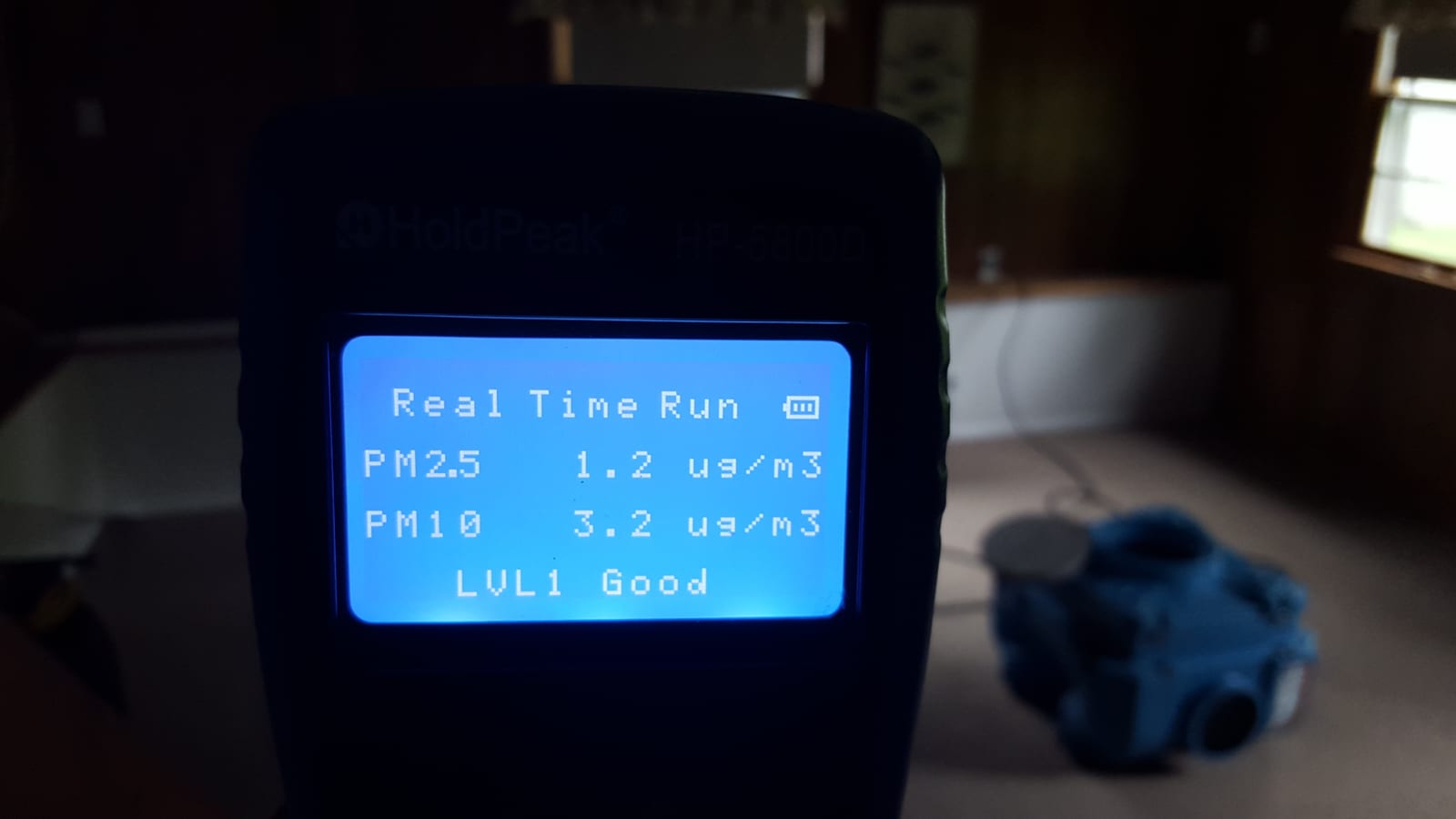
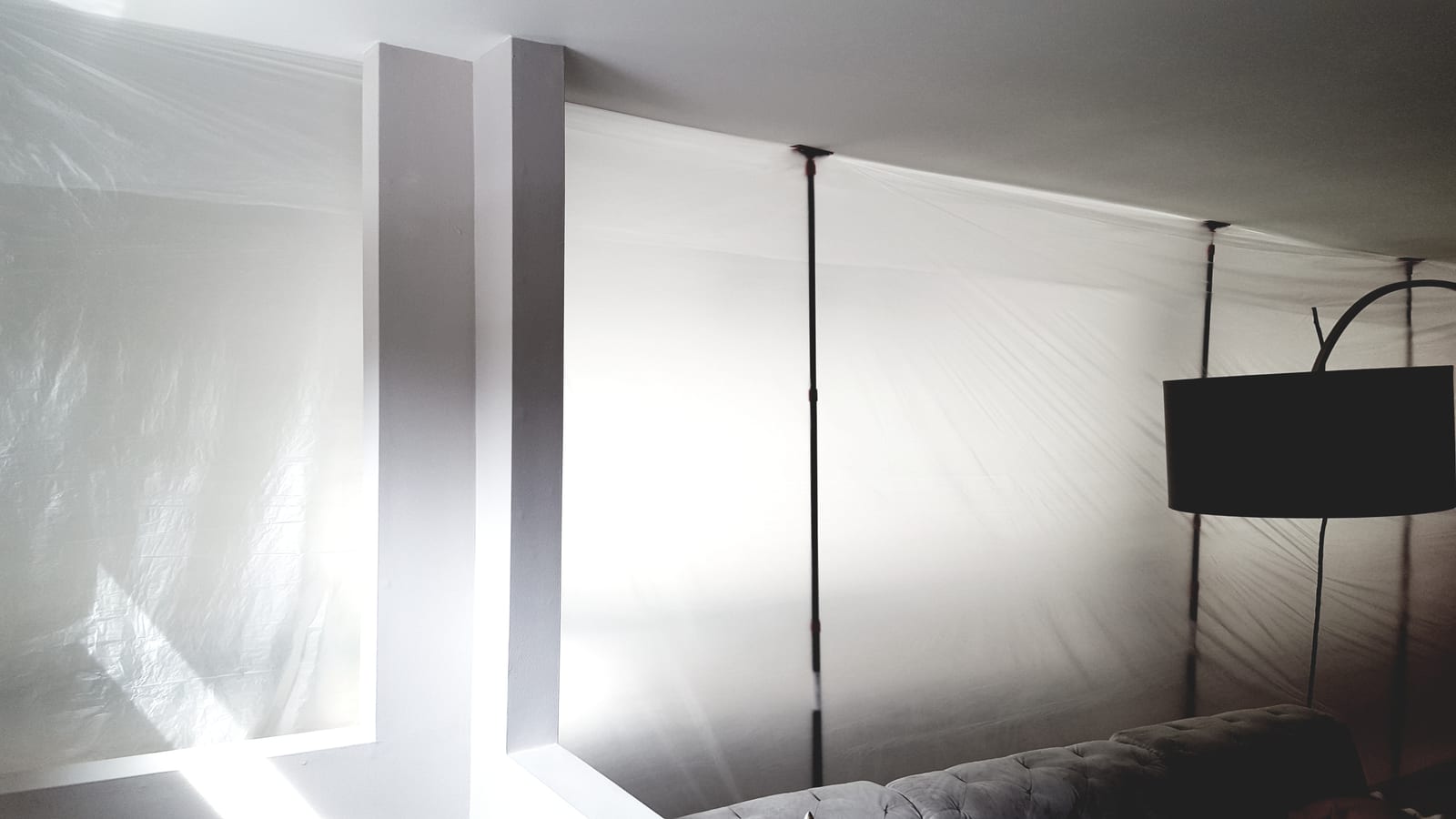
From 911 Storm restoration work in Fairfield County, CT and Westchester County, NY.
Common questions
PM2.5 / PM10 Air Quality Meter FAQ
What does LVL1 / LVL2 / LVL3 mean on the air quality meter?
1-5 scale: LVL1 = Good (PM2.5 under 12 µg/m³), LVL2 = Moderate (12-35), LVL3 = Unhealthy for sensitive groups (35-55), LVL4 = Unhealthy (55-150), LVL5 = Very Unhealthy / Hazardous (150+). Post-restoration target is LVL1.
Is a PM2.5 meter enough to clear a mold remediation?
Not as the only test. For mold work the gold standard is third-party air sampling with lab analysis (spore counts compared to outdoor baseline). PM2.5 readings are real-time site verification useful alongside spore counts — they tell you total particulate is at baseline. Combine both for full clearance documentation.
Why use PM meters during fire cleanup?
Fire restoration generates significant airborne particulate during cleanup — soot, drywall dust, HEPA-vacuumed debris. Real-time PM monitoring lets us verify our containment is working (no particulate migration out of the work zone) and lets us verify air quality has returned to baseline before releasing the space.
Can a homeowner buy a PM meter for ongoing monitoring?
Yes — consumer-grade PM monitors (PurpleAir, Awair, IQAir) start around $200-$300 and provide continuous air quality data. Useful for homes with sensitive occupants (asthma, allergies), or for monitoring during seasonal high-particulate events (summer wildfire smoke, pollen). They're not the same as professional restoration clearance instruments but they're useful for ongoing awareness.
See this equipment on your loss
Free on-site assessment with FLIR thermal + moisture mapping + Xactimate scope. 60-minute response across Fairfield County, CT and Westchester County, NY.
Call (203) 604-2474Other restoration equipment
Damage Doesn't Wait — Neither Do We
60-minute response. Free estimate. We handle your insurance claim.
IICRC Certified • Licensed & Insured • All Major Insurance Carriers