
FLIR Thermal Camera
Non-invasive moisture mapping that finds water you can't see
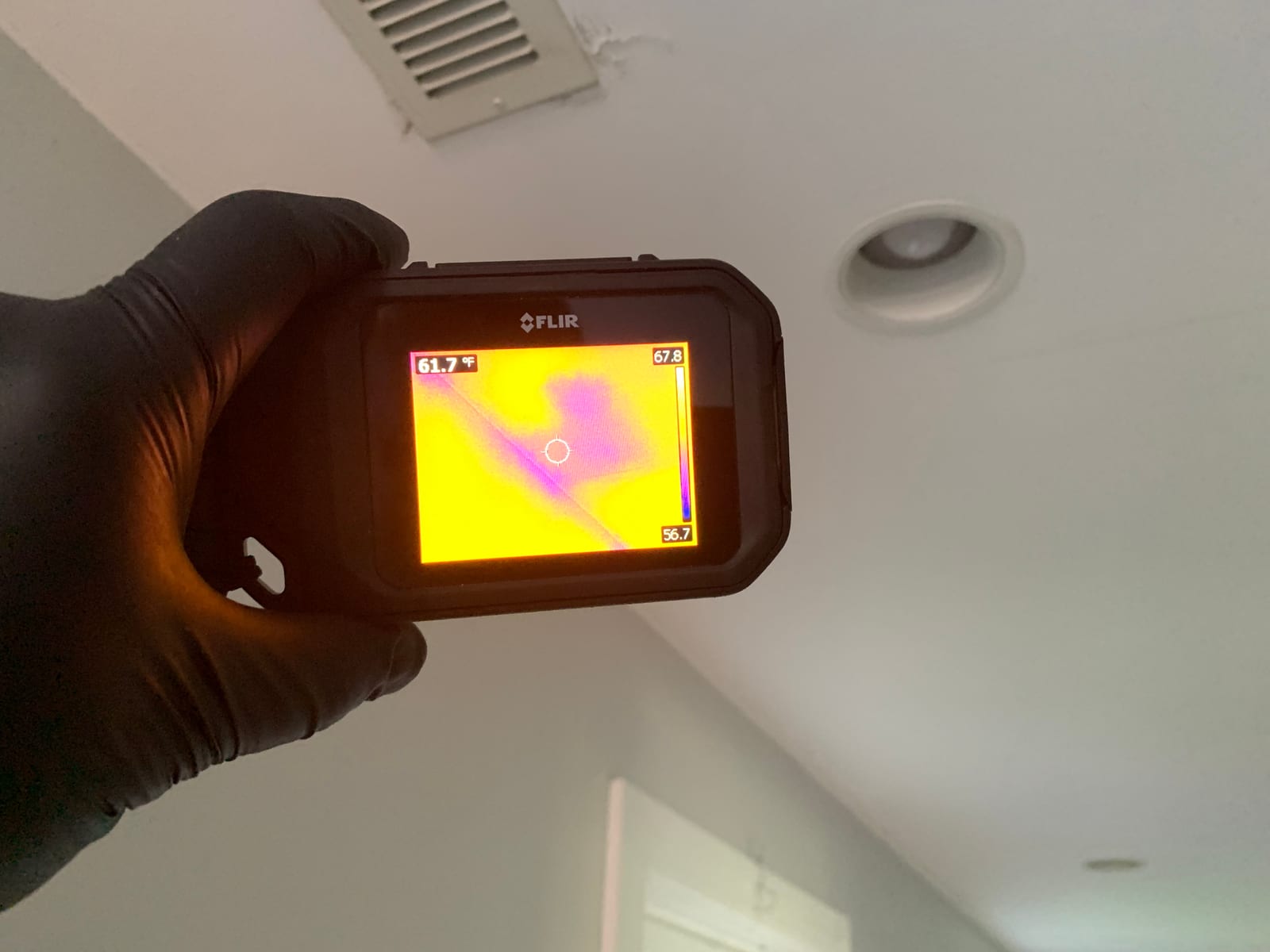
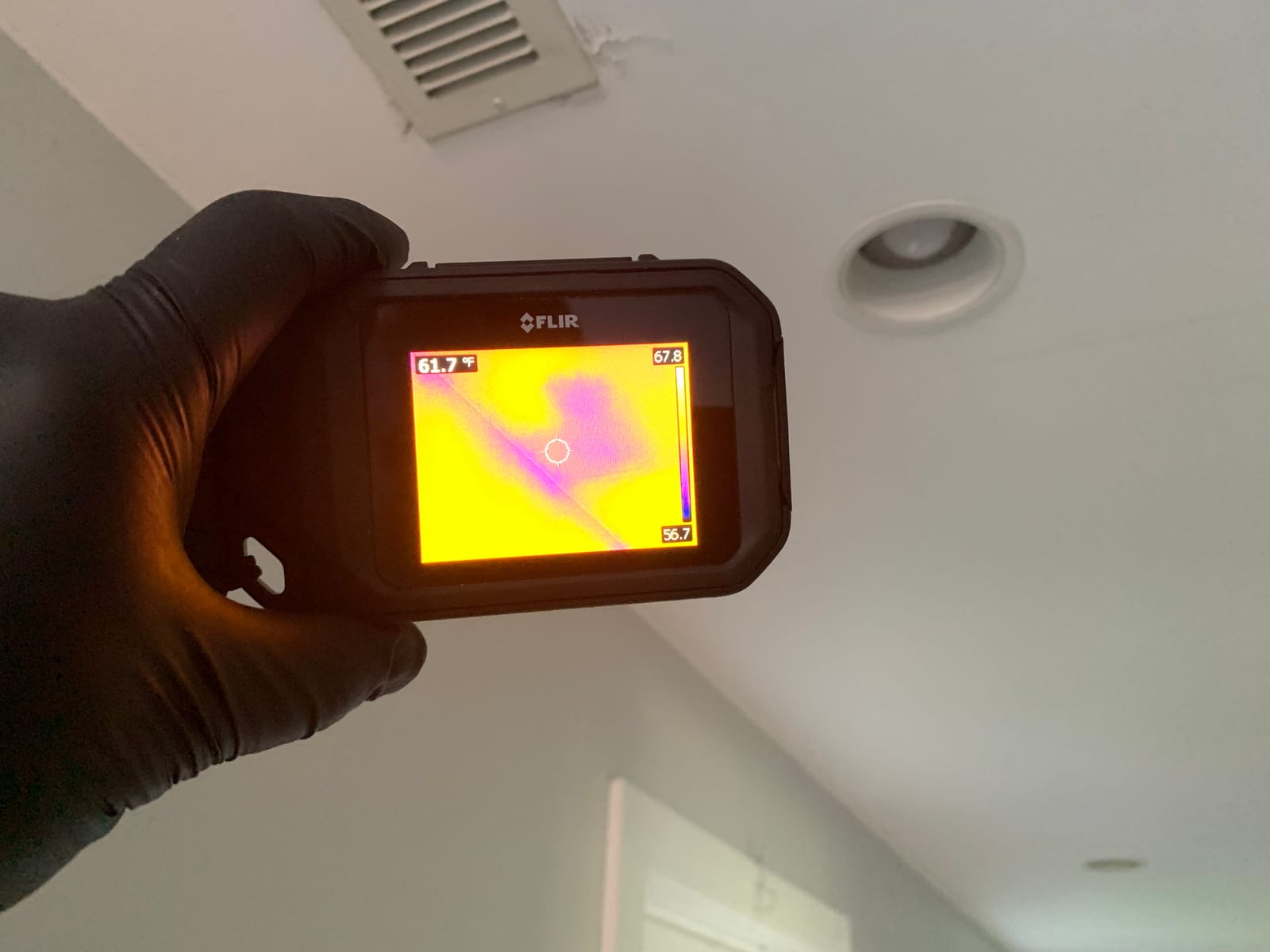
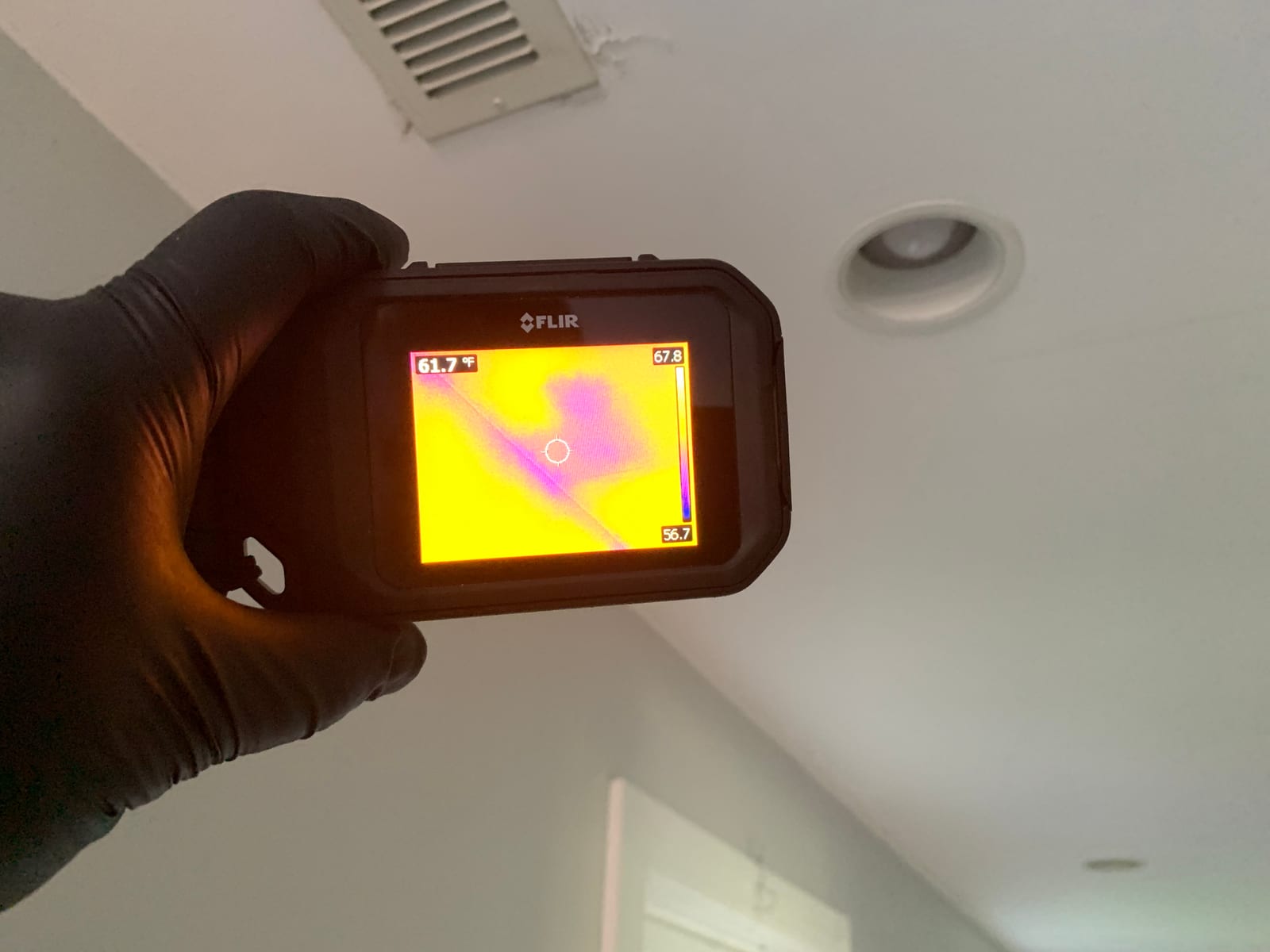
A thermal imaging camera (commonly called a FLIR after the leading manufacturer) shows the temperature of every surface it points at as a heat-map image. The relevance for water damage: wet materials are typically several degrees colder than dry surroundings because of evaporative cooling. That temperature differential shows up clearly in the thermal image — even when the wet area is invisible to the naked eye behind drywall, wallpaper, or finished flooring.
We use thermal imaging on every water damage assessment. It's not a substitute for direct moisture meter readings (the FLIR doesn't tell you moisture content; it tells you surface temperature), but it dramatically reduces the search area for where moisture meters need to read. A 1,500 sq ft basement that took 60 minutes to map exhaustively with pin meters alone takes 15 minutes with thermal-first targeting.
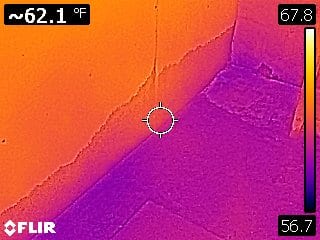
Thermal imaging is also a powerful diagnostic for showing the homeowner what we found. A photograph of stained drywall doesn't convey hidden saturation. A thermal image showing a 10-foot blue (cold) zone tracking the path of water migration is unambiguous.
When we use it
- › Initial assessment of every water damage loss
- › Tracking water migration paths from the source through walls and floors
- › Mold remediation scoping — identifying the moisture pattern feeding the mold
- › Verification post-drying that no missed wet areas remain
- › Documenting the loss extent for insurance claim photos
How to read the output
On a FLIR image, cooler temperatures display as darker / blue colors and warmer as brighter / red. Wet building materials typically read 3-10°F cooler than dry adjacent areas due to evaporation. The blue/cold zones in a thermal image tell you where to take direct moisture meter readings. Important: temperature differential isn't the same as moisture content — always verify with a pin meter before scoping demolition.
Models we typically deploy
- › FLIR E5 / E6 / E8 — professional handheld imagers used on residential losses
- › FLIR ONE Pro — smartphone-attached imager for documentation
- › FLIR T-series — higher-resolution models for commercial-scale assessments
Limitations
Thermal imaging shows surface temperature, not moisture content directly. A cold surface might be wet — or it might just be near an air vent. Always cross-check with a calibrated moisture meter. Thermal imaging also struggles in environments where the surrounding temperatures are similar to the wet material temperature (e.g., after several days of drying when the differential has equalized).
FLIR Thermal Camera on real jobs
From 911 Storm restoration work in Fairfield County, CT and Westchester County, NY.
Common questions
FLIR Thermal Camera FAQ
Can FLIR thermal imaging tell me how wet something is?
No — it tells you temperature, not moisture content. Wet surfaces are typically cooler than dry ones due to evaporative cooling, but the camera doesn't quantify moisture. We always cross-check FLIR readings with calibrated pin / pinless moisture meters before making demolition or drying decisions.
How does the FLIR find water behind drywall?
Water evaporating from the back of the drywall cools the front-facing surface. That cooler area shows up in the thermal image. The camera essentially turns evaporative cooling into a visible diagnostic — the cooler the area, the more likely active moisture is present behind the surface.
What's the difference between FLIR and infrared?
FLIR is a brand; thermal imaging cameras from any manufacturer use the same long-wave infrared technology. The terms are often used interchangeably in restoration ('thermal imaging' or 'IR scanning'). What matters is image resolution, calibration, and operator skill — not just brand.
Will FLIR work after the area has been drying for several days?
Less reliably. As drying progresses the temperature differential between wet and dry materials narrows. By day 3-5 of drying, FLIR may show no obvious wet zones — at that point we rely on direct moisture meter readings to verify drying completion.
See this equipment on your loss
Free on-site assessment with FLIR thermal + moisture mapping + Xactimate scope. 60-minute response across Fairfield County, CT and Westchester County, NY.
Call (203) 604-2474Other restoration equipment
Damage Doesn't Wait — Neither Do We
60-minute response. Free estimate. We handle your insurance claim.
IICRC Certified • Licensed & Insured • All Major Insurance Carriers